



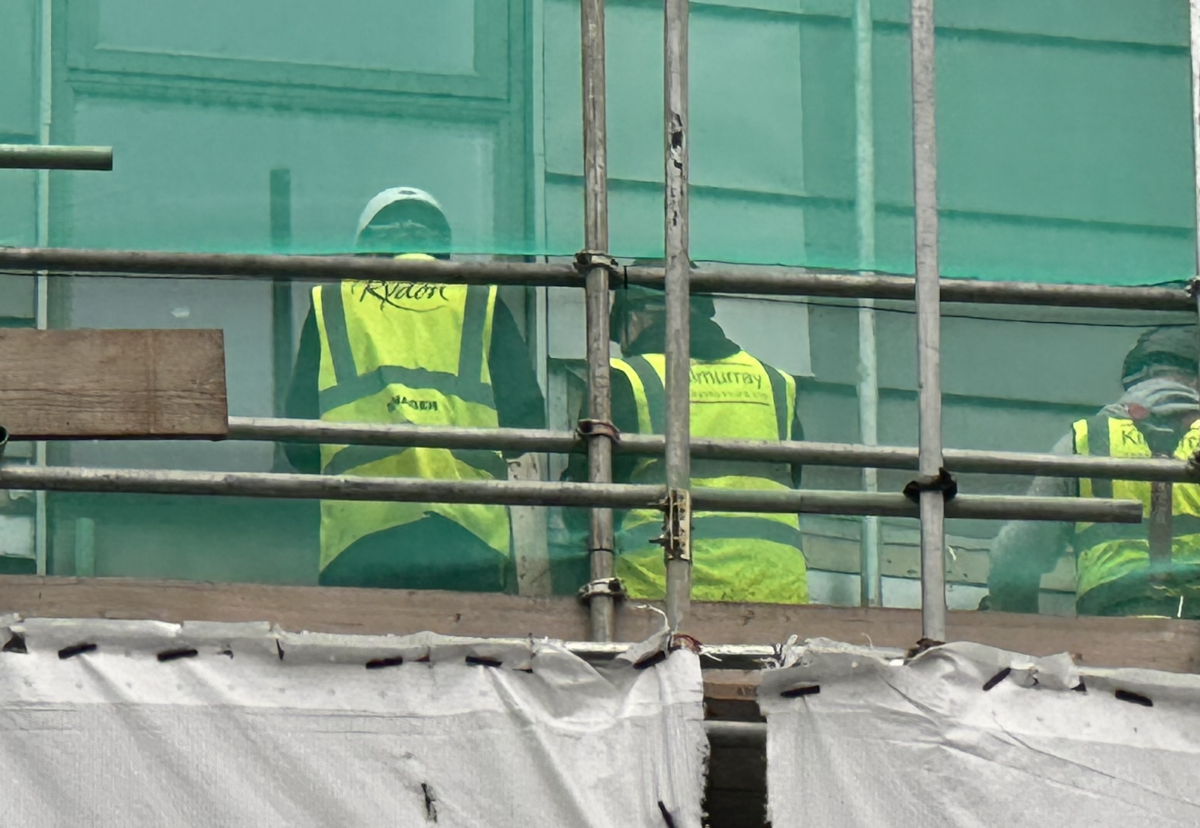
Latest Government figures up to July show 2,146 of the 4,697 buildings being monitored have yet to start remediation work.
That means 46% of identified buildings have yet to start work, compared with 718 under way and 1,833 completed.

The biggest challenge sits with the Cladding Safety Scheme and developer-led remediation delivery routes.
Under the CSS, only 127 of 1,438 eligible buildings have completed work and 269 are on site.
That leaves 1,042 buildings still waiting to start — nearly three-quarters of the eligible CSS programme.
And the workload is still growing, with another 2,253 buildings at pre-eligibility stages, including 1,352 live applications and 901 at pre-application.

Developers are facing a similarly heavy pipeline. Of 1,833 buildings identified with unsafe cladding under the developer remediation route, 566 are complete and 296 are under way.
That leaves 971 (53%) buildings where work has not started.

Across the wider developer remediation contract, which also includes other life-critical fire safety defects, developers are facing an estimated £4.3bn remediation bill.
By contrast, the earlier remediation programmes after Grenfell are now largely through their workloads.
.JPEG)
The ACM programme has completed 478 of 516 buildings, leaving just 14 still to start.
The Building Safety Fund has completed 487 of 639 buildings, with 75 under way and 77 yet to begin.
Social landlords funding their own remediation are also further ahead, with 474 of 742 buildings complete and another 100 on site.
The figures show the cladding clean-up has now shifted into a second phase.
The original ACM and high-rise BSF programmes are closing down their remaining workloads, while the much larger CSS and developer pipelines are still trying to convert identified buildings into live construction jobs.
The eventual financial exposure for the industry remains substantial.
Ministry of Housing, Communities and Local Government estimates the total capital cost of dealing with unsafe external wall systems on buildings over 11m at between £11.8bn and £22.7bn, with a central estimate of £15.1bn.
Government programmes are expected to fund around £8.9bn, while developers, housing associations and other non-government bodies are expected to meet around £6.1bn.
And the known backlog may not yet represent the full scale of the job.
MHCLG estimates between 5,800 and 7,300 buildings will ultimately require remediation or mitigation through its programmes.
With 4,697 currently being monitored, another 1,100 to 2,600 buildings could still enter the system.